


The AI Model Price War Just Ended the Open-Weight Era
If you feel like your tech stack is shifting beneath your feet, you’re not imagining it. The first half of July 2026 has completely reset the economics of artificial intelligence. Within a massive 24-hour window, OpenAI dropped its specialized GPT-5.6 family (Sol, Terra, and Luna), SpaceXAI shipped Grok 4.5, and Meta shook the industry by launching Muse Spark 1.1.
But this wasn't a standard race for higher benchmark scores. It is a ruthless price war aimed at driving inference costs—the price of running an AI model—to absolute zero. And it claims a major casualty: Meta's commitment to open-weight dominance.
The Strategic Shift: Custom Silicon and Agentic Workflows
The real battlefront has moved from general-purpose chatbots to highly specialized, autonomous agentic workflows.
- Meta’s Pivot: For years, Meta dominated the open ecosystem with the Llama series. With Muse Spark 1.1, they have introduced their first major paid, closed model. Built specifically for autonomous agents, it features a 1-million-token context window designed to click through mobile, desktop, and browser interfaces on a user's behalf.
- OpenAI's Triad: OpenAI abandoned the "one model to rule them all" approach. The GPT-5.6 release splits capabilities into specialized chips: Sol for heavy reasoning, Terra for balanced cost-performance, and Luna for raw speed.
- Sovereign Silicon: To survive this margin compression, international players are actively decoupling from the traditional US hardware stack. DeepSeek announced it is designing its own custom inference silicon to break free from Nvidia dependency, a move rapidly being mirrored by Alibaba and Baidu.
Hardware Follows the Hype: The Physical Network Bottleneck
While software companies slash API prices, the physical infrastructure supporting them is hitting a wall. Data centers are running out of power, and optical networks are choking under massive workloads.
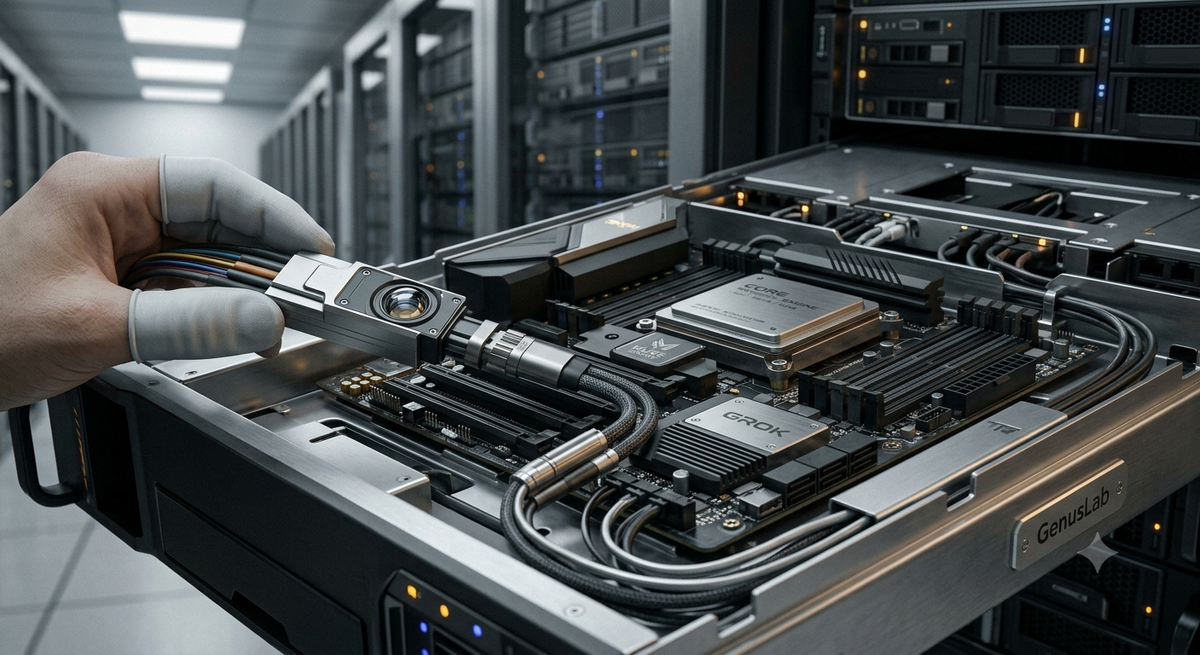
This week, Microsoft and 3M announced a major infrastructure partnership to tackle this exact issue. Microsoft Azure will become the first hyperscale cloud provider to deploy 3M's Expanded Beam Optical (EBO) connectors directly into its AI data centers.
[Traditional Fiber Connectors] ---> High maintenance, dust-sensitive, slow deployment
[3M Expanded Beam Technology] ---> Reduces alignment sensitivity, speeds up deployment timelines
By utilizing 3M’s materials science, Microsoft aims to drastically reduce the cleaning, inspection, and deployment timelines required to spin up new AI clusters.
What This Means for Builders
If you are managing software lifecycles or building applications today, the takeaway is clear: do not lock yourself into a single LLM provider.
With inference costs crashing down and models specializing by task type (speed vs. reasoning vs. agency), the winning architecture for H2 2026 relies on dynamic routing. Your applications should seamlessly pass lightweight tasks to cheap, fast models like Luna while reserving costly heavy-lifting for orchestration engines like Muse Spark or Sol.
The raw intelligence layer is officially a commodity. The value now lies entirely in how you orchestrate it.